


CASE STUDY / Rozsauveg.hu
Rozsauveg.hu: turning an experience into an online business system
A well-designed website does more than exist online. It becomes part of the business process.
Starting point
Rozsauveg.hu is not a simple brochure website. It is the digital front door of an experience-painting business, where visitors need to choose a programme, reserve a date, sometimes pay online, and receive a reliable confirmation.
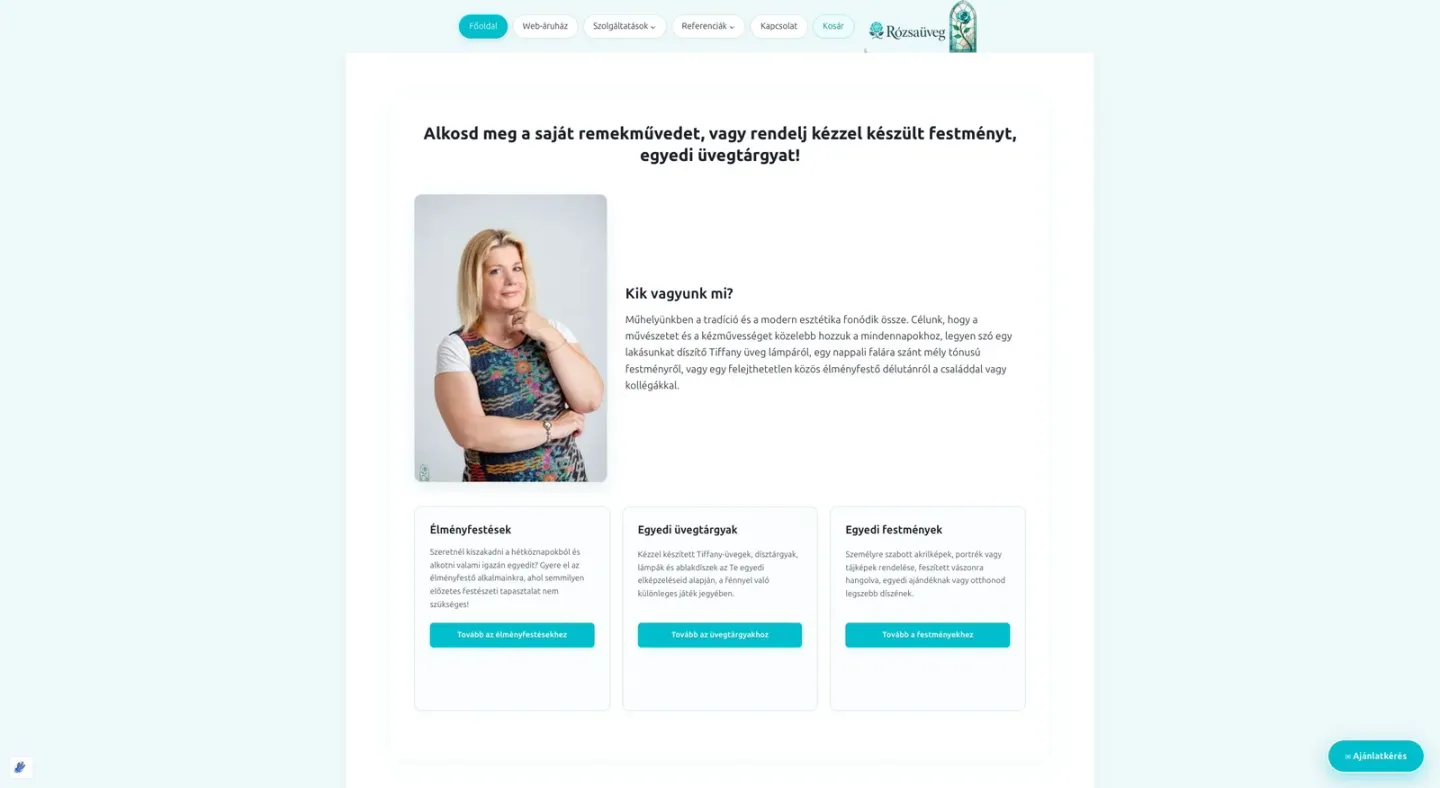
This type of customer journey is often decided within minutes. A visitor discovers the site, understands the experience, selects an event, reserves a place and expects clear confirmation. If any step is slow, uncertain or complicated, especially on mobile, the journey can easily break down.
The goal was therefore not merely a visually appealing site. The project required a sustainable WordPress-based system that supports customer acquisition, bookings, payments, communication and measurable marketing together.
The solution in brief
The system is centred on WordPress, extended by Amelia for booking processes and WooCommerce for orders and payments. A dedicated performance, security, CDN and measurement layer supports the application.
Core building blocks
- Content and web interface: a flexible, manageable WordPress foundation.
- Booking: dates, capacity and the booking journey managed with Amelia.
- Orders and payments: a structured checkout and order lifecycle with WooCommerce.
- Performance: page, object and image caching for a faster first impression.
- CDN and edge layer: Cloudflare-based delivery and protection capabilities.
- Administrative access: Cloudflare Tunnel and Zero Trust for critical management interfaces.
- Measurement and consent: Google Tag Manager, server-side tagging and an auditable consent flow.
From booking to business process
Booking seems simple on the surface: a visitor picks a date. In the background, the system must handle available sessions, remaining places, customer data, orders, payment status, confirmation and administrative processing at the same time.
For Rozsauveg.hu, a deliberate handoff connects the booking layer and the WooCommerce order process. The chosen date, payment state and later order handling therefore live in a traceable operating process rather than in isolated forms or manual spreadsheets.
What this means for customers
- A clearer path to choosing and booking a programme.
- Less manual coordination.
- A more transparent confirmation process.
- Online payment where it is needed.
- Less uncertainty on mobile devices as well.
What this means for the operator
- More manageable booking and order data.
- A connection between booking, payment and follow-up.
- Administration that can be automated more effectively.
- Fewer opportunities for errors during manual handovers.
Performance: more than a score
The performance of a booking website cannot be judged from a single Lighthouse or PageSpeed score. Rozsauveg.hu has image-rich pages, WooCommerce features and a JavaScript-based booking interface. Amelia needs application-like behaviour: after the first load, interactions must remain fast and smooth.
The optimisation target was therefore a better real customer experience, not an artificially high measurement result. The delivery layer focuses on faster server responses, optimised image delivery, less unnecessary data transfer, more stable visual rendering and usable mobile booking.
Static page caching, object caching, CDN delivery and image optimisation work together. Dynamic booking and checkout routes receive dedicated cache rules because correct business behaviour matters more there than indiscriminate caching.
Performance is not the name of a plugin or a single measurement score. It is the combined result of cache strategy, media optimisation and the business functionality that loads on the page.
Security behind the public website
WordPress security does not begin and end with an administrator password or a single security plugin. In this project, the public website and internal administrative access received separate security treatment.
Alongside Cloudflare DNS, CDN and protection, protected internal services run behind a separate Cloudflare Tunnel. Cloudflare Zero Trust limits sensitive interfaces to authorised administrators; Google-account authentication also plays a role around critical access. CloudPanel and SSH access are not exposed unnecessarily to the public internet.
This does not make any website “unhackable”. The aim is to reduce attack surface, protect critical access more strongly and make operations more transparent.
Elements of the approach
- TLS-based encrypted communication.
- Cloudflare DNS, CDN and protection layer.
- Internal services placed behind a Tunnel.
- Zero Trust-based access protection.
- A regular update and maintenance mindset.
- Separated, documented infrastructure.
Consent and measurement together
Marketing measurement and privacy do not need to be opposing choices. Correct operation means that measurement begins only when the appropriate legal basis and visitor consent are available.
The central element of the consent flow is Real Cookie Banner. It lets visitors make a clear decision, in Hungarian, about non-essential services. Instead of parallel consent-management layers, the system is organised around one auditable flow.
The goal was not more banners or more tracking scripts. It was to make it clear what runs before consent, what starts only after analytics or marketing consent, and how the complete booking and order journey behaves in different consent states.
Server-side measurement and data quality
Modern marketing measurement can rely less and less exclusively on browser-side scripts. Alongside Google Tag Manager, the project includes server-side tagging infrastructure.
This creates a more controlled route for measurement data connected to owned infrastructure while keeping consent rules in effect. The integration paid special attention to the relationship between web and server containers, a dedicated tagging domain, cache exclusions, preview and debugging, proxy and forwarding headers, avoiding duplicated events and passing consent state correctly.
This is not a marketing feature that can simply be switched on. It is an integration task. The objective is useful business information, rather than an overloaded website and uncertain data quality.
Migration and operability
Moving an operating WordPress, WooCommerce and booking system is not just copying files and importing a database. During the infrastructure work for Rozsauveg.hu, the controlled handling of WordPress files, database, custom tables, configuration, caches, redirects, certificates and external integrations was all part of the work.
The objective was a foundation that remains updatable, backupable and restorable, and can be diagnosed transparently. The solution avoids direct edits to plugin or theme core, making later extensions easier to manage.
Backups are also an operational concern: creating a backup is not enough. It matters where it is stored, how often it runs, how long it is retained and whether restoration has been verified.
Who is this approach for?
This approach is especially relevant to businesses where the website does more than inform visitors: it supports a business process.
- Appointment-based service providers.
- Workshop, training and event organisers.
- Healthcare, beauty or consulting services.
- Educational and experience-programme businesses.
- Online shops and hybrid e-commerce/booking systems.
Does your website only exist, or does it support a business process?
If your website handles bookings, sales, payments, enquiries, customer communication or measurable marketing, its technical foundation directly affects customer experience and business outcomes.
Working on something similar?
- Booking system or appointment management
- WooCommerce and online payments
- Website performance and cache strategy
- Cloudflare or Zero Trust-based access protection