

CASE STUDY / Private home-automation environment
Open-source home automation for an energy-aware home
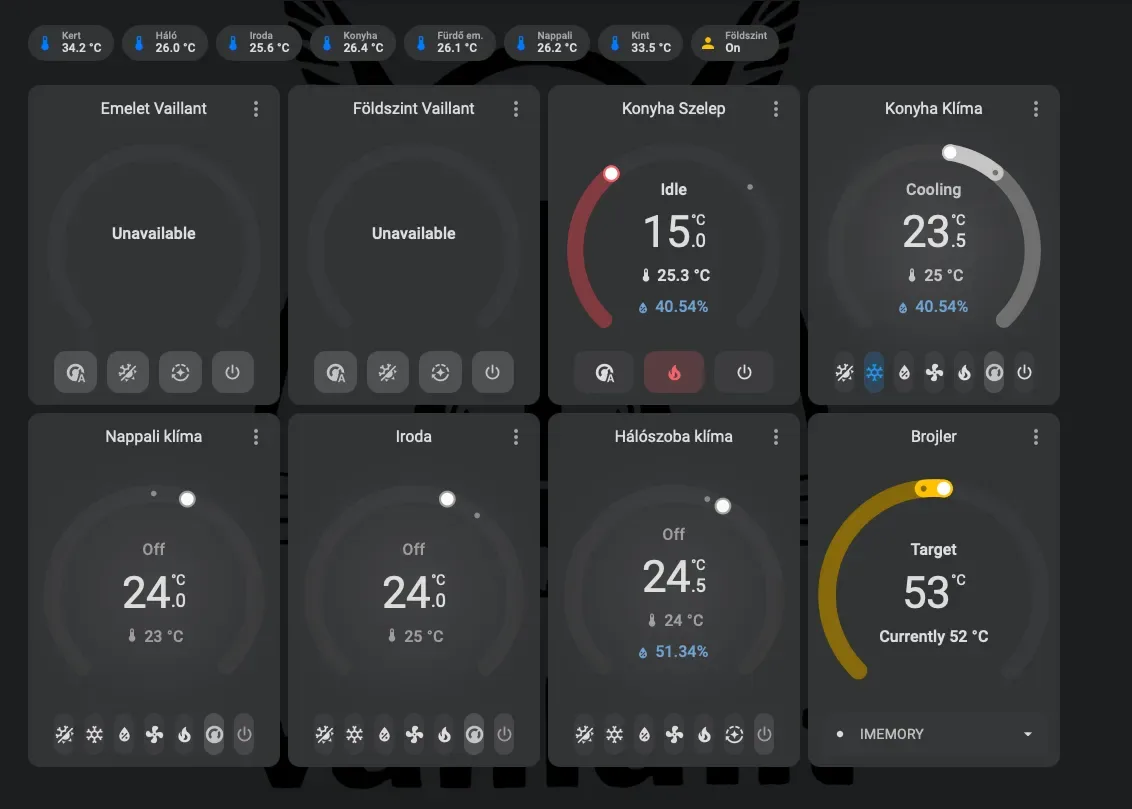
1 / 4
A smart home becomes genuinely useful when its different systems work together rather than simply existing beside one another.
Starting point
A modern home can quickly bring together devices from many manufacturers: solar generation, battery storage, EV charging, climate control, heating, lighting, sensors, switches and control panels. Each can be valuable on its own, but the real benefit comes from making them operate as one coherent system.
The goal was not a difficult-to-maintain collection of smart gadgets. It was to create a reliable, extensible and transparent home infrastructure that supports energy-aware operation, everyday comfort and long-term maintainability.
The solution in brief
The system is centred on the open-source Home Assistant platform, running on dedicated, energy-efficient HP Thin Client hardware. Important controls and automations can therefore operate locally rather than depending entirely on individual vendor clouds.
Home Assistant provides a shared control and visualisation layer for the different systems. The objective was not to add technology for its own sake, but to give every connected component a clear and sustainable role.
Core building blocks
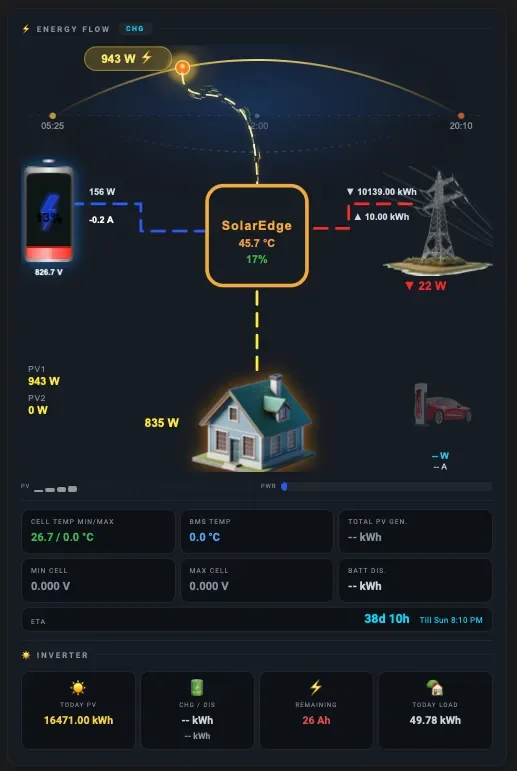
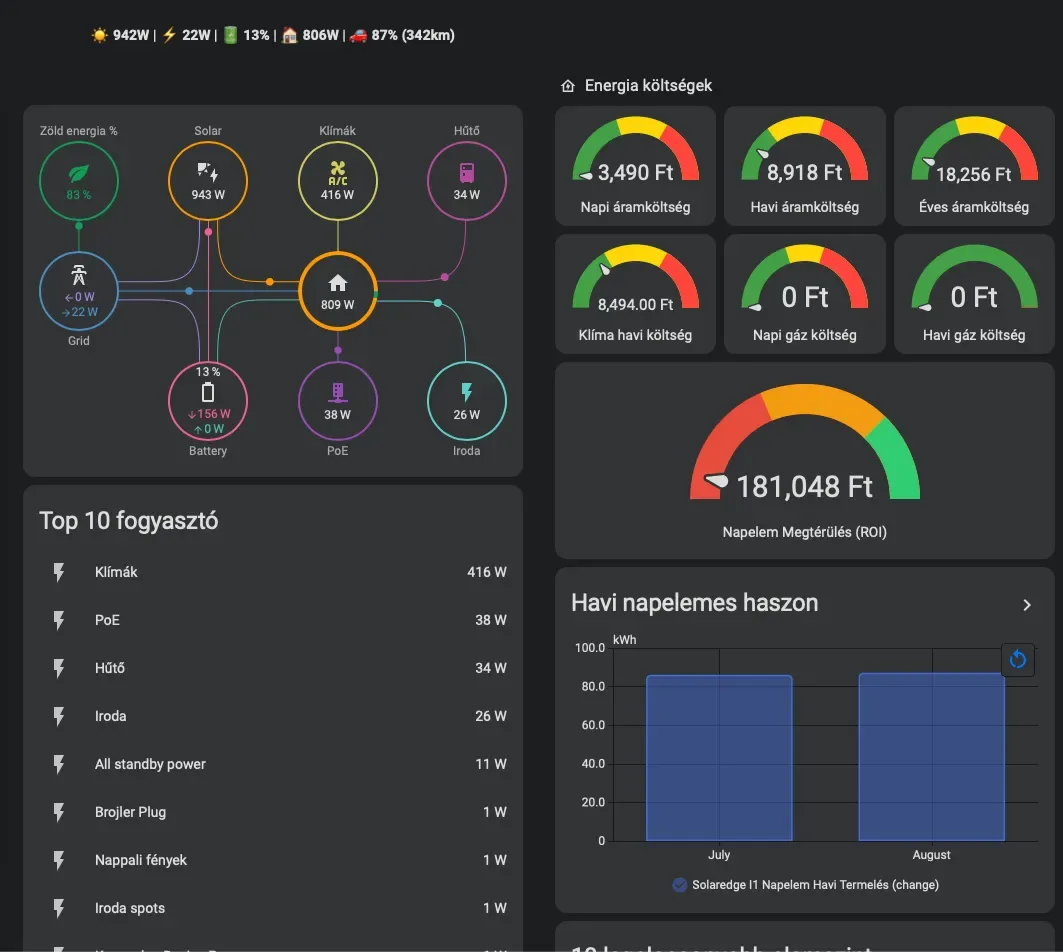
- Energy: SolarEdge solar generation and battery information, supported by Shelly energy monitoring.
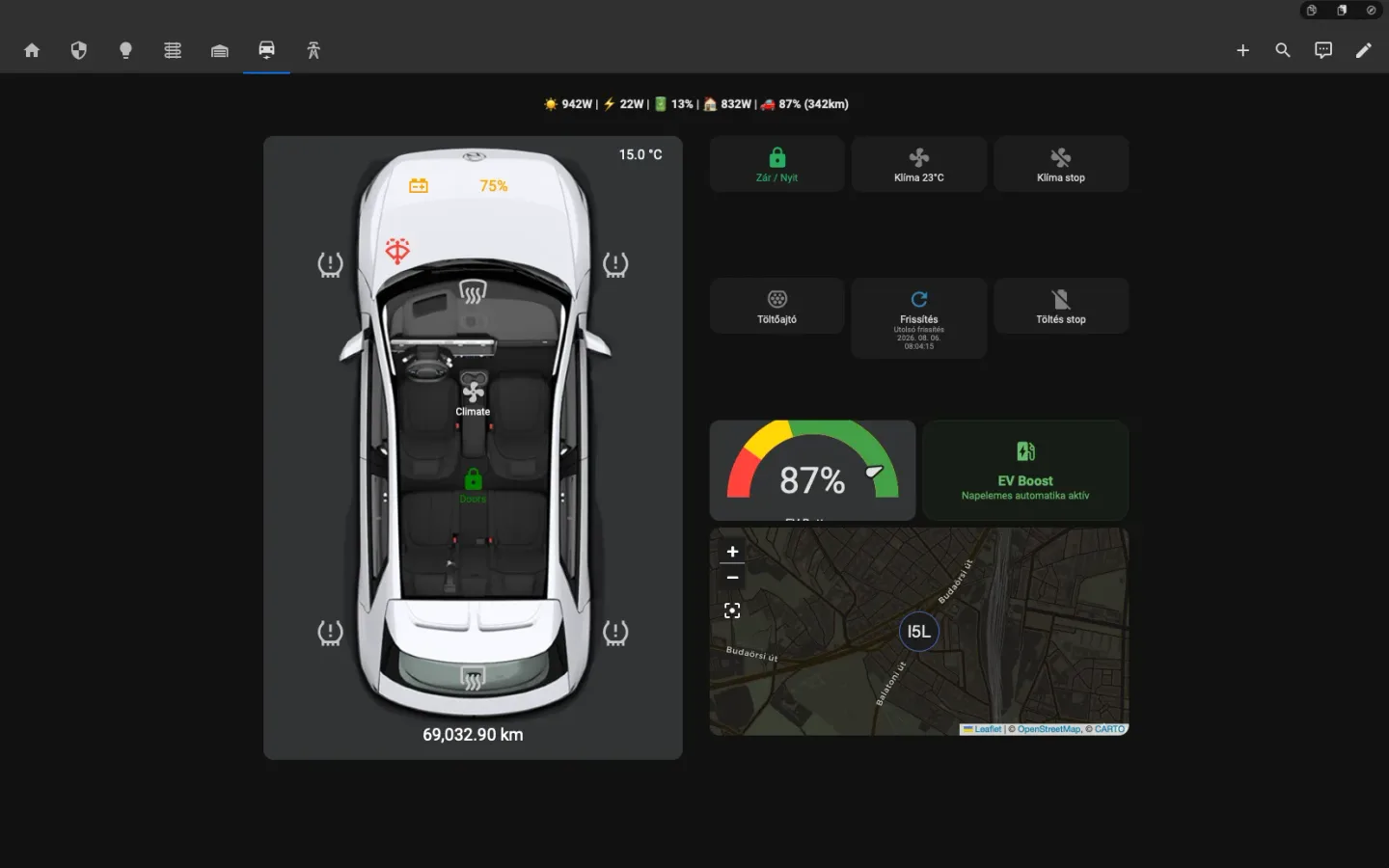
- Electric mobility: Wallbox charging and Hyundai EV integration.
- Comfort and building systems: Panasonic climate control and Ariston heating and domestic hot-water integration.
- Lighting and local control: Shelly, Sonoff/NSPanel, Meross, Eve, BTHome and Bluetooth LE devices, with adaptive lighting.
- Open device layer: Zigbee2MQTT, SMLIGHT Zigbee coordinators, Tasmota firmware-based devices and MQTT connections.
- Network foundation: UniFi infrastructure, an isolated IoT environment and AdGuard Home DNS-level filtering.
Vendor-independent integration in practice
One of the system's most important characteristics is that it is not built around a single vendor ecosystem. Energy, comfort, lighting and control components come from different platforms, yet take part in shared automations, dashboards and local interfaces.
This means a device selected later does not need to introduce an isolated application and a new operating routine. It can become part of the existing system. Open standards and local integrations are especially valuable when long-term extensibility matters more than the convenience of a single closed platform.
Energy and electric mobility
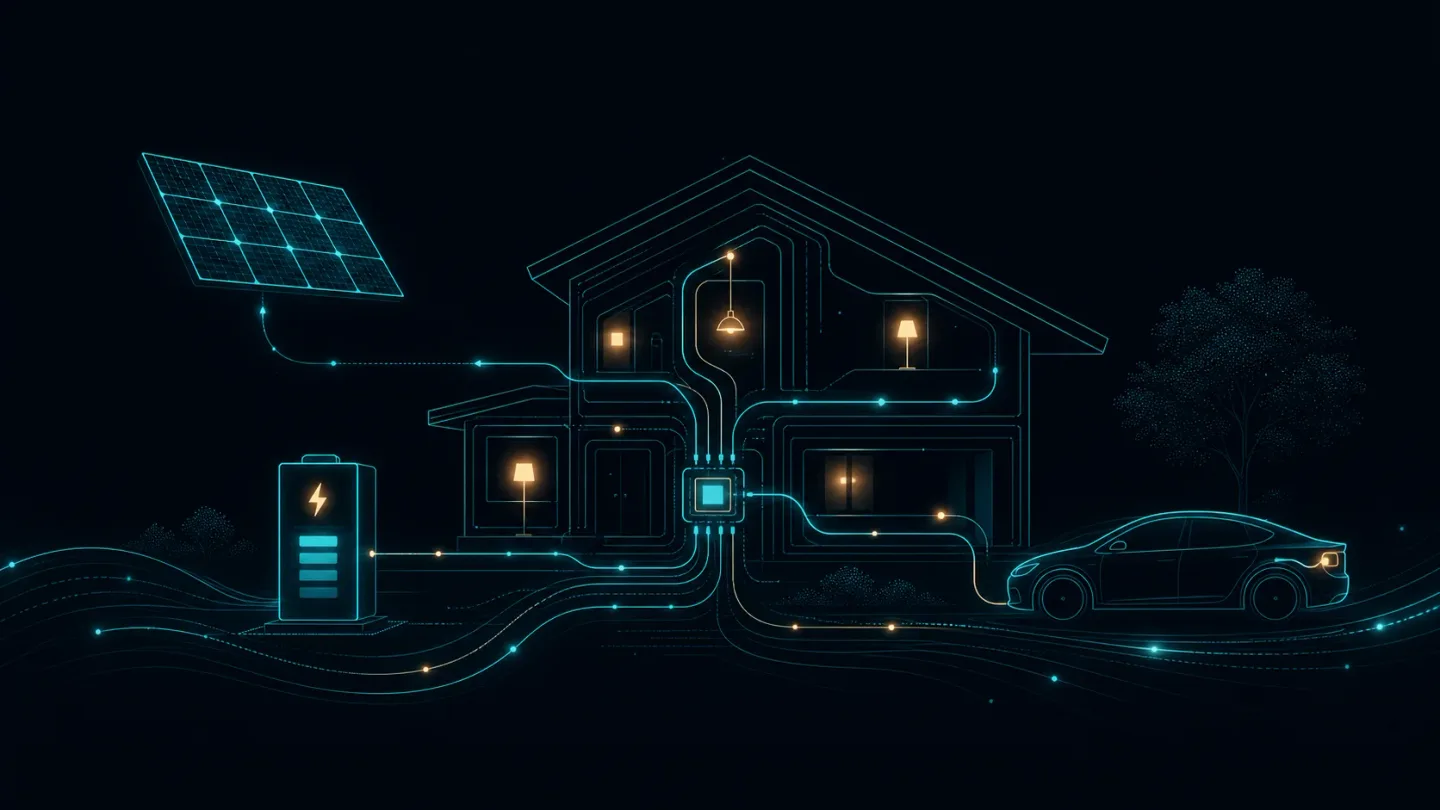
Solar production, household consumption, stored energy and EV charging are all part of the same decision-making system. The objective is not merely to charge a vehicle, but to make charging decisions that reflect the current energy situation while keeping household operation predictable.
The automation is built around stable states and deliberately avoids unnecessary rapid switching. That matters more than a flashy automation: good energy management is reliable, understandable and quietly useful in everyday life.
Energy management works best when it asks for less attention from the user, not more.
Comfort and everyday usability
The technology remains convenient in daily use: lighting scenes, physical controls, wall panels, climate and heating control, and clear energy dashboards support how the home operates.
Home Assistant is not simply a central app. It is an integration foundation where different endpoints can appear in one coherent user experience. The system can remain technically sophisticated while everyday control stays simple.
Secure remote access
Remote access is provided through Cloudflare Tunnel. The tunnel uses an outbound encrypted connection, making it possible to provide authorised users with access without directly exposing the Home Assistant instance to the public internet or relying on inbound port forwarding.
The tunnel does not replace application-level protection. Appropriate authentication, multi-factor sign-in, access policies, an isolated IoT environment and regular updates together provide the responsible security foundation. This case study intentionally does not disclose access, network or configuration details.
Operability: open, yet disciplined
Open source does not mean ad hoc operation. Configuration and automations are maintained in a readable, maintainable form; changes are validated and followed by targeted reloads. This makes troubleshooting, future expansion and long-term preservation of the system more practical.
Result
The result is an open, vendor-independent and expandable home-automation environment that coordinates energy, mobility, comfort and everyday control. Its value is not one spectacular feature, but the deliberate collaboration of many technologies.
Considering a similar system?
When home or small-business automation needs to combine devices from several vendors, energy management, remote access or long-term maintainability, planning decisions matter well before the first integration is installed.